
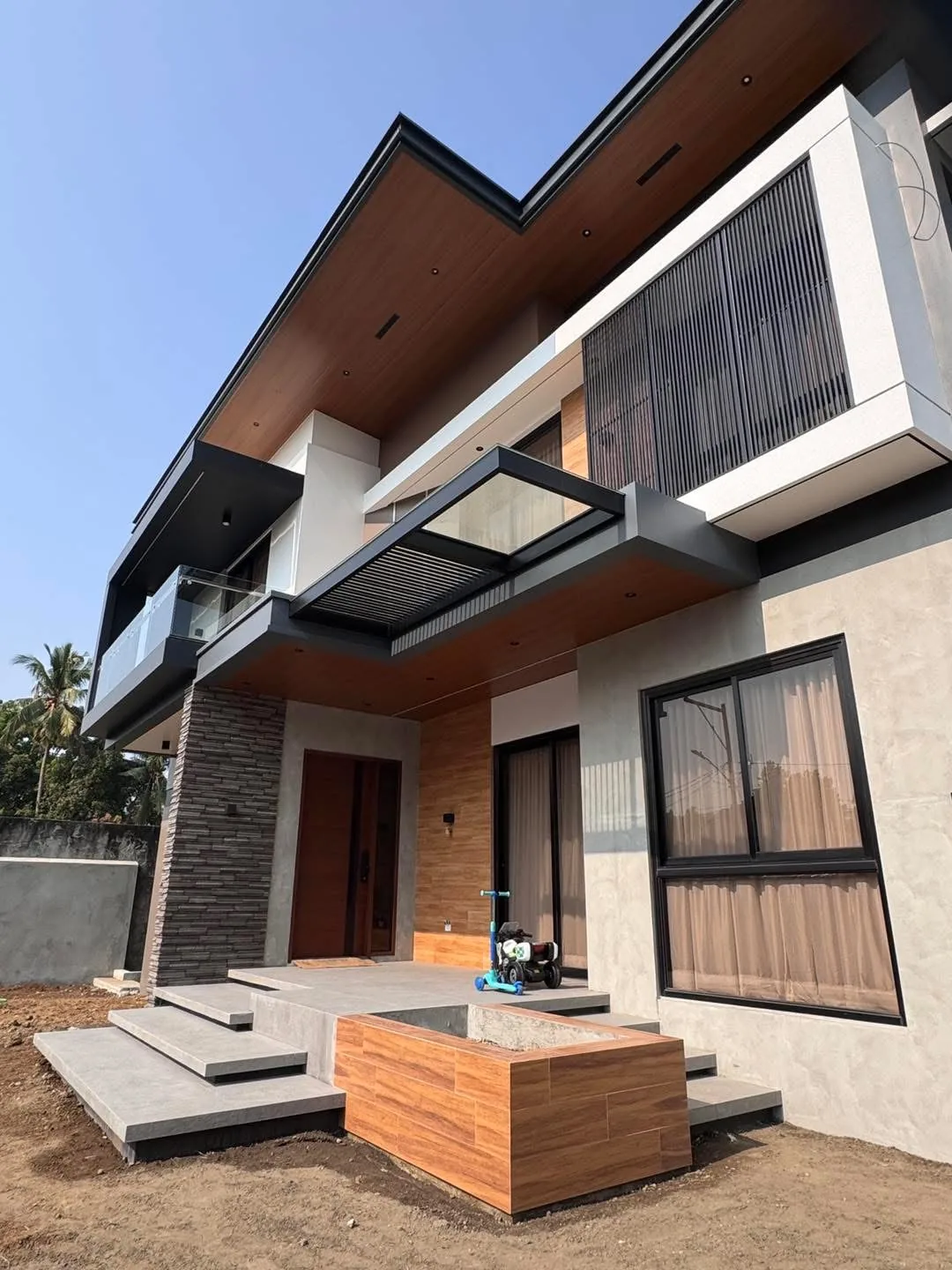
Guide
Quick Answer
A modern minimalist home becomes successful when the clean design is backed by disciplined structural choices, protected finishes, early comfort planning, specialized cabinetry, and coordinated turnover management.
Definition
Modern minimalist home construction is the process of translating a clean architectural concept into a durable residence through structural execution, precise finish sequencing, climate planning, storage integration, and detailed handover coordination.
Key takeaways
- Minimalist design looks simple only when the construction sequence is tightly managed.
- Premium structural choices affect durability, not only appearance.
- Finish protection, surface preparation, and subcontractor coordination can decide whether the final result feels refined.
- Air conditioning, cabinetry, furniture, lighting, and payment milestones should be planned as part of the build, not treated as last-minute add-ons.
Reality 1: Premium construction is a lifespan decision
Direct answer: The premium path matters because it improves the hidden parts of the house that homeowners depend on long after the finishes are installed.
For the Lumbia, Cagayan de Oro residence for Allan and Annabelle, the decision to pursue the PHP 6,137,000 Premium Package over the PHP 5,119,800 Economy Package was not simply about a better-looking finish. In a 161sqm, two-storey home, the biggest long-term value often sits inside the structure: concrete quality, steel reinforcement, preparation work, and comfort systems.
A premium scope can help align the visible minimalist design with the invisible strength required for a family home. Enhanced Class-A concrete, high-grade steel rebars, and active split-type air conditioning inclusions give the project a stronger foundation for daily living and long-term use.
- Class-A concrete supports better density and strength targets.
- Higher-grade reinforcement helps the two-storey frame carry its structural demand.
- Integrated comfort inclusions reduce the risk of treating important systems as afterthoughts.
- Clear package decisions make it easier to compare value beyond surface finishes.
Reality 2: Finish protection is part of professional craftsmanship
Direct answer: A polished finish depends on protection during messy work, not only on the final paint or tile selection.
On an active construction site, clean minimalist surfaces are vulnerable before they are beautiful. Exterior painting with products such as Davies Sun & Rain, skimcoat preparation, lacquer primer, scaffolding, and wall protection must work together so one trade does not damage another trade's completed work.
Simple methods such as careful newspaper masking can still be effective when used with discipline. The point is not the material itself. The point is that windows, wall edges, skimcoated surfaces, and interior-ready areas must be shielded while exterior work continues.
- Masking protects windows, corners, and finished or near-finished surfaces.
- Skimcoat is porous and can be stained by paint overspray or rough handling.
- Primer and paint sequencing should be coordinated with scaffolding and access.
- Professional site behavior shows up in the details that homeowners may never notice directly.
Reality 3: Climate control should be designed into the home
Direct answer: Air conditioning performs better when unit sizing, room volume, and installation timing are coordinated before turnover.
In Cagayan de Oro, comfort planning is not a luxury detail. It affects how a home feels every day. The Lumbia project moved beyond basic provisions by coordinating with Divine-Aire for Celest Pro Full DC Inverter units: 2.0 HP for the living area, 1.5 HP for the master bedroom, and 1.0 HP units for Bedrooms 1 and 2.
Early coordination helps avoid awkward routing, delayed installation, and undersized equipment. When the HVAC partner, electrical work, ceiling work, and finish schedule are aligned, the home is more likely to feel complete on move-in day.
- A larger living area may require a stronger unit than the bedrooms.
- Bedrooms need comfort planning that matches actual room use.
- Full DC inverter systems can support efficient daily cooling when sized and installed properly.
- Warranty, service access, and timing should be understood before final turnover.
Reality 4: Cabinetry is a specialized fit-out scope
Direct answer: Cabinetry should be treated as a separate quality-sensitive trade because it affects storage, durability, and the minimalist interior language.
Homeowners often assume that construction automatically includes every interior storage detail. In practice, high-quality cabinetry needs its own measurements, material decisions, hardware planning, and installation sequencing.
For tropical conditions, moisture-aware material selection matters. Marine plywood, painted finishes, walk-in closet systems, kitchen storage, wardrobes, and wall TV cabinets must be coordinated with walls, floors, lighting, outlets, appliances, and quartz countertops.
- Kitchen cabinetry must support the intended countertop and appliance layout.
- Wardrobes and walk-in closets should match real storage habits.
- TV wall cabinetry should hide wiring without blocking service access.
- Marine plywood can be a practical substrate choice in humid local conditions when detailed and finished properly.
Reality 5: The final sprint turns construction into a livable home
Direct answer: The last phase is where structure, finishes, furniture, lighting, payments, and subcontractor schedules must converge.
As the project approaches its April 2026 finishing phase, the work becomes more detailed and more emotionally visible. Chandelier glass at the stair landing, solid-core timber comfort room doors, furniture delivery, headboard and footboard panels, bedroom side rails, and final fixtures can change the feel of the house quickly.
This phase also needs disciplined coordination. Milestone payments, subcontractor completion, punch list checks, delivery timing, and owner approvals should move together so the home does not stall at the finish line.
- Lighting and stair details become strong visual anchors during final finishing.
- Doors, furniture, and bedroom components should arrive after spaces are ready to receive them.
- Digital payment records help keep milestones transparent.
- A punch list keeps final corrections visible before turnover.
Checklist: Modern minimalist home construction checklist
- Confirm the structural package, concrete assumptions, steel reinforcement, and finish inclusions before approving the contract.
- Document protection methods for windows, floors, skimcoated walls, and painted surfaces before finish work starts.
- Plan air conditioning capacity, routes, installation schedule, warranty, and service access early.
- Treat cabinetry as a dedicated fit-out scope with materials, drawings, hardware, and finish samples.
- Track lighting, doors, furniture, fixtures, and punch list items during the final sprint.
- Keep milestone payments, change notes, and subcontractor schedules documented.
Service-relevant next steps
- Use design-build planning when the minimalist concept still needs budget and buildability alignment.
- Use residential construction support when drawings, scope, and structural direction are ready for execution.
- Use fit-out and finishing support for cabinetry, paint systems, fixtures, lighting, and turnover preparation.
Related JMG services
For two-storey home construction, site coordination, structural execution, and turnover planning.
Design-Build PlanningFor aligning modern minimalist design goals with budget, site condition, and buildable scope.
Fit-Out / Finishing WorksFor cabinetry, finishes, fixtures, lighting coordination, and handover details.
Common Questions
Is a modern minimalist home easier to build because it looks simple?
No. Minimalist homes often require tighter workmanship because plain surfaces, clean lines, and hidden transitions make mistakes easier to see.
What should homeowners prioritize first: visible finishes or structural quality?
Both matter, but structural quality should be decided early because it is difficult and expensive to change later. Finishes can be refined, but weak assumptions inside the structure can affect long-term performance.
Why should air conditioning be planned before the house is finished?
Early planning helps coordinate unit sizing, electrical requirements, pipe routes, drainage, ceiling work, wall penetrations, service access, and installation timing.
Does cabinetry need a separate scope from general construction?
Usually yes. Quality cabinetry depends on precise measurement, moisture-aware materials, hardware selection, finish details, and coordination with appliances, countertops, walls, floors, and electrical points.