
Guide
Quick Answer
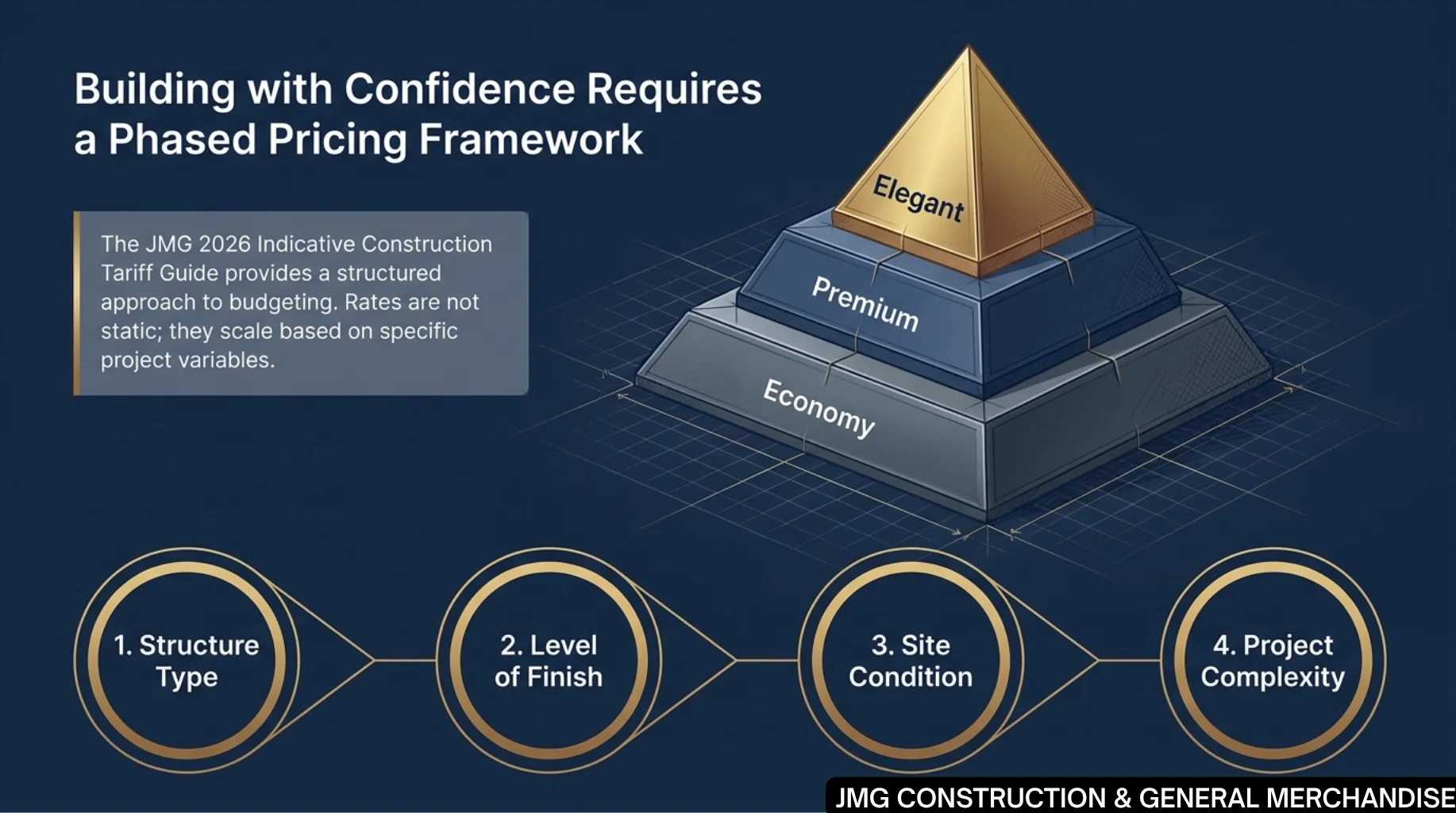
Residential construction cost is shaped by floor area, structural complexity, site condition, finish selections, labor scope, logistics, and how complete the drawings and specifications are.
Definition
A construction estimate is a priced interpretation of scope. It is only as reliable as the drawings, measurements, site assumptions, finish schedule, and exclusions behind it.
Key takeaways
- Floor area matters, but it is not the only cost driver.
- Finish level can move the budget significantly even when the house size stays the same.
- A site visit helps identify access, slope, drainage, and utility concerns before pricing is finalized.
- Ask for documented assumptions so you can compare proposals on the same basis.
Why do similar-sized houses cost different amounts?
Direct answer: Two houses with the same floor area can cost different amounts because structure, finishes, site conditions, and construction details are different.
A simple rectangular home on a clear, accessible lot is easier to price than a multi-level home with large openings, balconies, retaining walls, custom finishes, or limited access. In Cagayan de Oro, local lot conditions and delivery access can also affect labor movement and material handling.
When comparing estimates, ask what the price includes. One proposal may include finish work, documentation, and site preparation while another may exclude them.
- Building shape and number of storeys
- Foundation and structural requirements
- Roof type, ceiling height, and facade details
- Electrical, plumbing, and drainage scope
- Finish level and fixture selections
How do materials and finishes affect the budget?
Direct answer: Materials and finishes affect both direct cost and installation complexity.
Tiles, windows, doors, paint systems, cabinets, lighting, fixtures, and exterior finishes all have different price tiers. A premium-looking facade may require more labor, better substrate preparation, or longer lead times.
Homeowners should avoid approving a broad estimate without knowing the finish assumptions. A standard finish schedule helps reduce misunderstanding.
- Flooring type and tile size
- Window and door specifications
- Kitchen and cabinet scope
- Bathroom fixture quality
- Facade materials, exterior lighting, and paint systems
How does site condition affect pricing?
Direct answer: Site condition can affect excavation, foundation work, drainage, access, staging, hauling, and worker productivity.
A contractor may need to adjust pricing after checking slope, existing structures, soil concerns, road access, and drainage. These are not small details; they can affect method, schedule, and risk.
If the site has unusual conditions, consult a qualified professional before finalizing structural or drainage decisions.
- Narrow or difficult truck access
- Steep or uneven lot areas
- Demolition or clearing needs
- Drainage and water flow concerns
- Nearby walls, fences, or structures that limit workspace
What should be included in a useful estimate?
Direct answer: A useful estimate should show scope, assumptions, exclusions, finish level, payment structure, and items that may change after site or professional review.
The goal is not only to get a price. The goal is to understand what that price means. Ask whether the proposal includes permits, professional fees, design work, temporary facilities, mobilization, site preparation, and turnover items if those are relevant to your project.
Do not treat general budget guidance as final advice. Final requirements may depend on project scope, site condition, and professional review.
- Scope of work and floor area basis
- Material and finish assumptions
- Items excluded or owner-supplied
- Allowances and provisional sums
- Timeline assumptions and payment milestones
Checklist: Cost review checklist before comparing estimates
- Confirm the floor area basis used by each proposal.
- Ask whether the estimate includes site preparation, temporary works, and mobilization.
- Request finish assumptions for flooring, paint, fixtures, cabinets, and exterior surfaces.
- Check whether professional, permit, or documentation costs are included or separate.
- Ask what site conditions may change the price after review.
- Compare exclusions before comparing totals.
Service-relevant next steps
- Use budget guidance to set a realistic target before finalizing design.
- Ask for blueprint and documentation support if the estimate depends on unclear drawings.
- Request a site-specific construction consultation before treating a budget number as final.
Related JMG services
Common Questions
Is cost per square meter enough for budgeting?
Cost per square meter can help with early planning, but it is not a final price. Site condition, structure, finishes, access, timeline, and documentation affect the final estimate.
Why do contractors give different prices?
Contractors may be pricing different assumptions, finish levels, inclusions, exclusions, and risk allowances. Ask each contractor to document assumptions so the comparison is fair.
Should I add a contingency?
A contingency is often useful because site findings, material changes, and design revisions may affect cost. The right amount depends on scope and risk, so discuss it with your contractor or qualified professional.